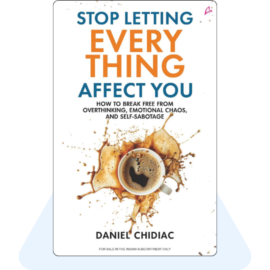
परिचय: आज के समय में यह किताब इतनी ज़रूरी क्यों लगती है
एक message एक घंटे तक unanswered रहता है और आपका मन पूरी कहानी बना लेता है। किसी meeting में कोई व्यक्ति थोड़ा distracted दिखता है और आप मान लेते हैं कि शायद आपसे कोई गलती हुई है। कोई दोस्त casually एक comment कर देता है और वह बात पूरे दिन आपके दिमाग में घूमती रहती है। आप दाँत साफ करते समय वही conversation दोहराते हैं, कल की tension आज के काम में लेकर आते हैं, और उन लोगों को समझने में अपनी energy खर्च करते रहते हैं जो शायद अब उस situation के बारे में सोच भी नहीं रहे। अगर यह pattern आपको जाना-पहचाना लगता है, तो Daniel Chidiac की किताब Stop Letting Everything Affect You सीधे उसी मानसिक थकान से बात करती है।
इस किताब का पूरा title है Stop Letting Everything Affect You: How to Break Free from Overthinking, Emotional Chaos, and Self-Sabotage। Daniel Chidiac की official book description इसे 2025 की self-development guide के रूप में प्रस्तुत करती है, खासकर उन लोगों के लिए जो overthinking करते हैं, दूसरों की energy absorb कर लेते हैं, जल्दी emotionally react करते हैं, unhealthy relationship patterns में फँस जाते हैं, या छोटी-सी घटना को पूरे दिन का mood खराब करने देते हैं। किताब का संदेश यह नहीं है कि आपको caring बंद कर देनी चाहिए। संदेश यह है कि आप care कर सकते हैं, लेकिन हर opinion, delay, rejection, mood, message, mistake और misunderstanding को अपनी inner state का remote control देने की ज़रूरत नहीं है।
यही difference इस Readers Books Club summary का केंद्र यही है। Emotional strength cold बनना नहीं; peace pain को deny करना नहीं; और detachment indifference नहीं है। किताब self-respect, clear boundaries, healthier thinking और personal responsibility की ओर ले जाती है। इसके बजाय कि हम पूछें, “मैं सबको ऐसा कैसे behave कराऊँ कि मैं calm रहूँ?”, ज़्यादा powerful सवाल है, “मैं उन चीज़ों से कम controlled कैसे रहूँ जिन्हें मैं control नहीं कर सकता?”
Mindset, psychology, relationships, spirituality, meditation, Law of Attraction, coaching और personal growth की books पढ़ने वालों के लिए यह विषय बहुत relevant है। Readers Books Club का focus useful ideas को practical action में बदलना है। इस summary में आप सिर्फ Daniel Chidiac की book के प्रमुख themes नहीं समझेंगे, बल्कि practical reflection exercises, seven-day emotional reset, simple meditation practice, spirituality का grounded perspective, और coaching या life coach की मदद कब useful हो सकती है यह भी जानेंगे।
एक जरूरी editorial note: नीचे दिए गए 12 lessons Readers Books Club की editorial synthesis हैं। इन्हें book के official chapter titles नहीं माना जाना चाहिए। Summary book को reproduce नहीं करती; यह publicly described themes को आसान, engaging और practical भाषा में समझाती है।
Book at a Glance: Stop Letting Everything Affect You किस बारे में है
Daniel Chidiac की यह book एक बहुत modern लेकिन deeply human problem पर बनी है: हमने अपनी emotional life का बहुत बड़ा हिस्सा बाहर के लोगों और events को outsource कर दिया है। हमारा mood reply पर depend करता है। Confidence praise पर depend करता है। Peace इस बात पर depend करता है कि difficult person आज अच्छा behave कर रहा है या नहीं। एक criticism self-image बदल देता है। हम logically जानते हैं कि दूसरे लोगों के अपने fears, habits, wounds, agendas और bad days होते हैं, फिर भी emotionally उनके behavior को अपने बारे में verdict मान लेते हैं।
Official description कई practical goals highlight करती है: छोटी बातों को पूरे दिन पर हावी होने से रोकना, self-sabotage कम करना, guilt के बिना healthy boundaries बनाना, genuine guilt और manipulation का फर्क समझना, overthinking interrupt करना, हर बात personally न लेना, toxic relationship patterns पहचानना, victimhood से self-empowerment की ओर बढ़ना, cold बने बिना emotional detachment सीखना, और growth के हर stage को justify करने की जरूरत से बाहर निकलना।
यह book self-improvement, emotional wellness, relationships, boundaries, mindset और stress-management में naturally fit होती है। Overthinking, letting go और emotional intelligence की books पसंद करने वालों को इसका approach familiar लगेगा। अगर आपको The Let Them Theory, The Mountain Is You, The Courage to Be Disliked या boundaries पर लिखी books पसंद हैं, तो यह summary आपके लिए useful हो सकती है। इसका central message direct है: अपनी peace protect करने के लिए पहले यह देखना होगा कि आप power किसे दे रहे हैं।
Lesson 1: हर छोटी बात आपके पूरे दिन की हकदार नहीं होती
पाँच मिनट की घटना पाँच मिनट तक रह सकती है, या पाँच घंटे तक यह इस पर निर्भर करता है कि उसके बाद आपका mind क्या करता है। Event छोटा हो सकता है: rude cashier, delayed email, social media comment, colleague का tone, traffic, बदला हुआ plan, या दोस्त का call भूल जाना। Emotional cost तब बड़ा होता है जब event खत्म होने के बाद भी mind उसे carry करता रहता है।
इसका मतलब यह नहीं कि आपकी feelings irrational हैं। कभी छोटी घटना किसी पुराने wound को touch करती है, insecurity trigger करती है, या किसी बड़े pattern की याद दिलाती है। लेकिन “feel करना” और “feed करना” अलग चीज़ें हैं। Feeling naturally आती है। Feeding तब होती है जब हम insult को बार-बार rehearse करते हैं, imaginary arguments बनाते हैं, hidden meaning खोजते हैं, repeatedly story सुनाते हैं, और check करते रहते हैं कि हम अभी भी upset हैं या नहीं। पहली चीज़ emotion पैदा करती है; दूसरी उसे पूरे दिन का atmosphere बना सकती है।
Practical lesson है emotional attention में selectivity लाना। खुद से पूछिए: क्या यह अगले week भी matter करेगा? क्या मुझे कोई action लेना है? क्या यह repeated pattern है या one-time irritation? अगर pattern है, address कीजिए। अगर passing annoyance है, उसे छोटा रहने दीजिए। Temporary problem के लिए permanent mental room बनाने की जरूरत नहीं।
एक simple technique है “size test”। Event को उसके real consequences के आधार पर 1 से 10 तक score दें। फिर देखें कि आप उसे कितनी mental space दे रहे हैं। अगर event 3 है लेकिन attention 9 है, तो imbalance साफ दिखाई देता है। आप upset रह सकते हैं, फिर भी तय कर सकते हैं कि बाकी दिन उसी के around organize नहीं होगा।
Readers Books Club readers के लिए यह सिर्फ mood management नहीं है। Attention valuable resource है। Stranger का comment replay करने वाला वही समय reading, project, walk, loved one, meditation या rest को दिया जा सकता है। Peace protect करना time protect करना भी है।
| Readers Books Club Takeaway खुद से पूछिए “क्या problem अभी भी हो रही है, या मेरा mind उसे alive रख रहा है?” Feel कीजिए, जरूरी action लीजिए, फिर छोटी घटना को उससे बड़ा role मत दीजिए जितना वह deserve करती है। |
Lesson 2: Overthinking और problem-solving एक चीज़ नहीं हैं
Overthinking अक्सर responsible behavior जैसा feel होता है। हमें लगता है कि अगर conversation को एक बार और analyze कर लें तो answer मिल जाएगा। अगर हर possible future imagine कर लें तो surprise से बच जाएँगे। अगर हर mistake को बार-बार revisit करें तो अगली mistake रोक पाएँगे। Mind repetition को preparation की तरह पेश करता है।
लेकिन problem-solving और overthinking का outcome अलग होता है। Problem-solving धीरे-धीरे specific होता जाता है। वह decision, experiment, conversation, boundary या action की ओर जाता है। Overthinking circular होता है। वह उसी uncertainty की नई versions पैदा करता है, लेकिन control नहीं बढ़ाता। Result यह होता है कि mentally थक जाते हैं और practically वहीं रहते हैं।
Loop interrupt करने के लिए तीन questions बहुत useful हैं। पहला: मैं actually क्या जानता हूँ? दूसरा: मैं क्या assume कर रहा हूँ? तीसरा: मैं next क्या कर सकता हूँ? मान लीजिए किसी ने reply नहीं किया। Fact है कि message भेजा गया है। Assumptions हो सकते हैं कि वह angry है, interest खो रहा है, disrespect कर रहा है या intentionally ignore कर रहा है। Next action हो सकता है wait करना, later एक clear follow-up करना, या अपने day में आगे बढ़ जाना। यह तीन questions facts और stories को अलग करते हैं।
एक और rule है: “think once, decide once, review later.” अगर problem को thought चाहिए, 10 या 20 minutes deliberate thinking के लिए schedule कीजिए। Options लिखिए। Best available next step choose कीजिए। फिर review time तय कीजिए। इससे mind हर दस मिनट बाद case reopen करना बंद करता है, जैसे anxiety ही decision को बेहतर बना रही हो।
Meditation इस lesson को support करती है क्योंकि meditation में हम thought को notice करते हैं, लेकिन हर thought के अंदर नहीं जाते। Thought आता है, और हम breath या chosen focus पर लौटते हैं। Thought को defeat नहीं किया जाता; उसे unlimited attention नहीं दी जाती। यही skill daily life में भी काम आती है: “मैं notice कर रहा हूँ कि mind फिर वही story replay कर रहा है। मैं already decide कर चुका हूँ कि next क्या करना है।”
Lesson 3: Trigger और response के बीच pause बनाइए
बहुत से emotional regrets बहुत fast होते हैं। Message आता है और हम angry reply भेज देते हैं। Criticism सुनते ही defensive हो जाते हैं। Family member वही पुराना tone use करता है और हम तुरंत उसी पुराने argument में पहुँच जाते हैं। Trigger नया हो सकता है, response rehearsed होता है।
Emotional control का मतलब यह नहीं कि आप internally react ही न करें। इसका मतलब है इतनी space बनाना कि first impulse automatically final behavior न बन जाए। Pause दस seconds, दस minutes या overnight भी हो सकता है। Important यह है कि nervous system अकेले decision न ले।
STOP practice try कीजिए: Stop. Take one slow breath. Observe body और mind में क्या हो रहा है। Proceed with intention. हो सकता है chest tight हो, खुद को prove करने की urge हो, rejection का fear हो, embarrassment या anger हो। Experience को name करने से यह feeling कम हो सकती है कि आपको तुरंत act करना ही है।
Digital communication में pause खास important है। Text tone हटाता और speed बढ़ाता है। Tired state में message mood के through interpret होकर ऐसा reply बन सकता है जो calm state में आप नहीं कहते। एक simple rule highly activated state में major emotional reply नहीं relationships और self-respect दोनों protect कर सकता है।
यहीं emotional detachment शुरू होती है। Detachment issue avoid करना नहीं है। यह urgency को response की quality decide करने से रोकना है। कभी strongest answer calm होता है। कभी boundary। कभी silence। कभी question। Pause आपको one option से ज्यादा options देता है।
Lesson 4: हर बात personally लेना बंद कीजिए
Personalisation वह habit है जिसमें दूसरे लोगों के behavior को primarily अपने बारे में interpret किया जाता है। कोई quiet है तो आप मानते हैं कि आपने upset किया। Colleague short बोलता है तो लगता है वह आपको dislike करता है। Post पर likes कम हैं तो self-worth question होने लगती है। Friend plan cancel करता है और mind scheduling को rejection में translate कर देता है।
Reality यह है कि हर person अपने invisible world के साथ चलता है। वह tired हो सकता है, distracted, grief में, money को लेकर worried, family issue में, uncomfortable, या simply ऐसे habits के अनुसार behave कर रहा हो जो आपसे मिलने से बहुत पहले मौजूद थीं। उनका behavior आपको affect कर सकता है, लेकिन वह आपकी definition नहीं है।
Not taking things personally का मतलब disrespect tolerate करना नहीं। अगर कोई repeatedly agreement तोड़ता है, insult करता है, manipulate करता है, या reasonable boundaries ignore करता है, pattern को seriously लेना चाहिए। Goal harmful behavior के excuses बनाना नहीं है। Goal है behavior को respond करना, लेकिन दूसरा wound न बनाना: “इससे prove होता है कि मैं unworthy हूँ।”
एक strong question है: “इसके और क्या meanings हो सकते हैं?” आपको most comforting interpretation choose करने की जरूरत नहीं। सिर्फ mind को याद दिलाना है कि first explanation automatically fact नहीं होती। इससे psychological flexibility बढ़ती है और mind-reading पर dependency कम होती है।
Law of Attraction और manifestation में interest रखने वाले लोगों के लिए यह lesson intention protect करता है। अगर आपका mood हर बार दूसरे person के बदलने पर बदलता है, तो focus externally controlled है। Grounded manifestation practice कहती है कि आप qualities self-respect, clarity, courage, love, abundance, patience पर वापस आएँ, बिना यह demand किए कि पहले आसपास के लोग perfect conditions create करें।
Lesson 5: Healthy boundaries guilt के बिना peace protect करती हैं
Boundary यह बताती है कि आप किस behavior में participate करेंगे, क्या accept करेंगे, और limit cross होने पर आप क्या करेंगे। Boundary punishment, threat या दूसरे person को control करने की strategy नहीं है। यह distinction इसलिए important है क्योंकि बहुत लोग boundary तब तक नहीं बनाते जब तक resentment unbearable न हो जाए, फिर वही boundary anger के रूप में communicate होती है।
Healthy boundaries simple हो सकती हैं: “मैं work hours में calls नहीं ले सकता।” “मैं इस topic पर discuss करने में comfortable नहीं हूँ।” “अगर conversation insulting हो जाती है, तो मैं leave करूँगा और बाद में बात करेंगे।” “मैं अभी money lend नहीं कर सकता।” “Commit करने के लिए मुझे more notice चाहिए।” इन statements को courtroom argument की तरह defend करने की जरूरत नहीं। ये limit और action communicate करती हैं।
Guilt इसलिए आ सकता है क्योंकि boundary familiar system बदल देती है। शायद आप हमेशा available रहे हैं। शायद आपने सीखा कि good person बनने का मतलब सबको happy रखना है। शायद family में कोई member “no” सुनकर strongly react करता है। Guilt का presence automatically boundary को wrong नहीं बनाता। कभी guilt सिर्फ old pattern के opposite behave करने की emotional cost है।
Boundaries information भी reveal करती हैं। Healthy person आपके “no” से disappointed हो सकता है, लेकिन respect भी कर सकता है। Manipulative person boundary को betrayal, selfishness या “तुम मुझसे love नहीं करते” के proof की तरह use कर सकता है। उनका reaction alone boundary की fairness तय नहीं करता।
Life coaching या relationship coaching useful हो सकती है जब कोई intellectually boundaries समझता है लेकिन pressure में repeatedly abandon कर देता है। Coach vague intentions को scripts, rules और accountability में बदलने में help कर सकता है। लेकिन serious abuse, coercive control या safety concerns में qualified professional या specialist support जरूरी हो सकती है।
| Boundary Reminder आप किसी को disappoint कर सकते हैं, बिना disrespect किए। Healthy boundary का उद्देश्य दूसरे person को agree कराना नहीं; अपनी participation clear करना और consistency से follow through करना है। |
Lesson 6: Real guilt और manipulation का फर्क समझिए
Guilt useful हो सकता है जब वह आपकी values के genuine violation की ओर point करे। आपने झूठ बोला, commitment तोड़ी, careless behavior किया, या किसी को hurt किया, और discomfort repair के लिए motivate करता है। ऐसी situation में healthy response responsibility है: behavior acknowledge करें, appropriate हो तो apologise करें, amends करें, और pattern change करें।
लेकिन guilt किसी ऐसे person द्वारा भी activate किया जा सकता है जो access, compliance, attention, money, secrecy या emotional labour चाहता है। Message direct हो सकता है “अगर तुम्हें सच में care होती तो तुम यह करते” या subtle हो सकता है। आपको उनकी सारी sacrifices याद दिलाई जा सकती हैं, selfish कहा जा सकता है, या जब भी आप independent choice करें, उनके mood की responsibility आपके ऊपर रखी जा सकती है।
एक useful test है wrongdoing और disappointment अलग करना। क्या आपने reasonable commitment violate की, या किसी को आपका decision simply पसंद नहीं आया? दोनों अलग हैं। किसी की disappointment real हो सकती है, फिर भी वह आपको अपनी needs abandon करने की obligation नहीं देती।
Manipulation पहचानना आसान होता है जब आप slow होते हैं। हर request का immediate answer जरूरी नहीं। कहिए, “मुझे सोचने दीजिए।” फिर पूछिए: अगर guilt decision से remove हो जाए तो क्या मैं फिर भी यह choose करूँगा? अगर मैं “no” कहूँ तो मुझे किस बात का डर है? Request reciprocal और reasonable है? क्या यह person दूसरे situations में मेरे “no” का respect करता है?
यह lesson self-trust से deeply connected है। अगर किसी दूसरे person का हर strong reaction आपको अपने judgment पर doubt कराता है, तो आपको control करना आसान हो जाता है। Self-trust का मतलब यह नहीं कि आप always right हैं। मतलब यह है कि feedback examine कर सकते हैं, लेकिन अपनी decision-making authority automatically surrender नहीं करते।
Lesson 7: Self-sabotage अक्सर protection जैसा दिखता है
Self-sabotage बहुत कम conscious decision जैसा feel होता है कि “मैं अपनी life destroy करना चाहता हूँ।” अक्सर वह protection जैसा feel होता है। आप procrastinate करते हैं क्योंकि शुरू करने से ability test हो सकती है। Conversation avoid करते हैं क्योंकि honesty conflict create कर सकती है। Unavailable partner चुनते हैं क्योंकि real intimacy risky लगती है। Goal तब छोड़ देते हैं जब progress visible होने लगती है, क्योंकि success नई identity, ज्यादा responsibility या visibility माँग सकती है।
इसीलिए self-criticism alone काम नहीं करता। खुद को lazy, weak या undisciplined कहना shame create कर सकता है, लेकिन behavior की function identify नहीं करता। Better question है: “यह pattern मुझे किससे protect कर रहा है?” Answer rejection, uncertainty, failure, judgment, commitment, disappointment, loneliness, या familiar environment से grow out करने का fear हो सकता है।
Protection identify होने पर healthier strategy बनाई जा सकती है। अगर procrastination perfectionism से protect करती है, task छोटा कीजिए और imperfect first version allow कीजिए। अगर people-pleasing conflict से protect करता है, एक low-stakes “no” practice कीजिए। अगर applications avoid करना rejection से protect करता है, goal offers received की जगह applications sent पर based रखिए।
Readers Books Club का approach implementation है। Books behavior change करें तभी useful हैं। Sabotage loop लिखिए: Trigger -> Feeling -> Automatic Action -> Short-Term Reward -> Long-Term Cost. फिर chain का एक part redesign करें। पूरी personality नहीं, repeated interruption चाहिए।
यह coaching से भी connect होता है। Life coach identify करने में help कर सकता है कि stated goals और repeated behavior कहाँ match नहीं करते। Value यह नहीं कि कोई आपको orders दे; value structured space है जहाँ patterns notice हों, choices clear हों और उस action के लिए accountability बने जिसे आप already जानते हैं कि important है।
Lesson 8: Toxic patterns isolated promises से ज्यादा important हैं
Relationships confusing हो सकती हैं जब words और patterns disagree करते हैं। कोई beautifully apologise करता है लेकिन behavior repeat करता है। हर crisis के बाद change promise करता है। Disrespect के बाद affection, withdrawal के बाद attention, boundary cross करने के बाद generosity दिखाता है। Good moments आपको doubt कराते हैं कि difficult pattern सच में serious है या नहीं।
Chidiac की official description toxic patterns पहचानने और बिना regret के walk away करने की बात करती है। Key word “pattern” है। Pattern repeated behavior है जो time के साथ दिखाई देता है, खासकर तब जब issue clearly communicate किया जा चुका हो। One mistake grace deserve कर सकती है। Repeated cycle information देती है।
Intensity की बजाय consistency देखें। क्या person responsibility लेता है? क्या boundaries pressure के बिना भी respect होती हैं? क्या apologies behavior बदलती हैं? क्या disagreement punishment, threats, humiliation, silent treatment या manipulation के बिना हो सकता है? क्या आप relationship में free हैं या reactions prevent करने में careful?
Unhealthy dynamic छोड़ना painful हो सकता है। Emotional clarity attachment को erase नहीं करती। आप person को miss कर सकते हैं, खुद पर doubt कर सकते हैं, good moments याद कर सकते हैं, या hope कर सकते हैं कि one more conversation closure दे देगी। यहाँ detachment का मतलब यह accept करना है कि longing हमेशा evidence नहीं होती कि वापस जाना wise है।
Serious abuse, stalking, coercion, threats या danger में priority safety है, self-help analysis नहीं। Book summary, meditation practice या coaching session professional, legal, medical या emergency support की substitute नहीं है।
Lesson 9: Emotional detachment का मतलब cold होना नहीं है
Detachment शब्द harsh लग सकता है। लोग imagine करते हैं कि इसका मतलब indifferent, emotionally unavailable या love से disconnected होना है। लेकिन healthy detachment इससे ज्यादा simple है: दूसरे लोगों को उनके thoughts, moods और choices रखने देना, बिना उन्हें अपने nervous system का manager बनाए।
आप किसी से love कर सकते हैं और फिर भी उन्हें उनके decisions के consequences experience करने दे सकते हैं। Colleague की care कर सकते हैं, लेकिन उसका workload नहीं उठा सकते। Family member की बात सुन सकते हैं, लेकिन हर emotion fix करने की responsibility नहीं लेनी। Criticism receive कर सकते हैं, बिना collapse या attack किए। Detachment compassion बचाती है क्योंकि वह यह belief हटाती है कि compassion का मतलब self-abandonment है।
एक useful sentence है: “यह हिस्सा उनका है; यह हिस्सा मेरा है।” उनका anger उनका है। आपका tone आपका है। उनका opinion उनका है। Feedback useful है या नहीं यह decide करना आपका है। उनकी choice उनकी है। आपकी boundary और next action आपका है।
Meditation इस lesson के साथ naturally fit करती है। Meditation में sounds आते हैं, thoughts आते हैं, sensations और emotions आते हैं। हम notice करना practice करते हैं, लेकिन हर experience को grab नहीं करते। कई spiritual traditions witnessing awareness की बात करती हैं जो consciousness में pass हो रहा है उसे observe करना, बिना यह मानें कि हर passing event ही पूरा self है।
Carefully use किया जाए तो यह perspective everyday reactivity में useful है। “Anger present है” कहना “मैं ही anger हूँ” से ज्यादा space बनाता है। “मुझे rejection का fear महसूस हो रहा है” और “मुझे पता है rejection होने वाला है” दोनों अलग हैं। Detachment emotion हटाती नहीं; emotion के साथ आपका relationship बदलती है।
Lesson 10: Victimhood से self-empowerment की ओर बढ़िए
Life में ऐसे moments आते हैं जब लोग genuinely harm करते हैं, systems unfair होते हैं, circumstances painful होते हैं और outcomes control के बाहर होते हैं। Self-empowerment का use reality erase करने या victim को blame करने के लिए नहीं होना चाहिए। Useful shift यह है: “अब मेरे available power का हिस्सा कहाँ है?”
Victimhood mindset तब शुरू होता है जब “मेरे साथ क्या हुआ” की story “अब क्या possible है” की पूरी definition बन जाती है। हर decision wound के around organize होने लगता है। Future की responsibility उस person को दे दी जाती है जिसने past में harm किया। Self-empowerment कहती है: “मैंने शायद यह choose नहीं किया कि क्या हुआ, लेकिन मैं आगे क्या build करता हूँ उसमें participate करना चाहता हूँ।”
यह small choices से शुरू हो सकता है। मैं किससे बात करता हूँ? कौन-सी boundary set करता हूँ? कौन-सी skill सीखता हूँ? कौन-सी appointment book करता हूँ? कौन-सा expense review करता हूँ? कौन-सा environment leave करता हूँ? कौन-सी routine support करती है? कौन-सी truth मैं खुद से hide करना बंद करता हूँ? Empowerment slogans से नहीं, behavior से real होती है।
यह lesson Law of Attraction के लिए grounded bridge भी बनाता है। Manifestation तब constructive है जब agency बढ़ाती है, magical helplessness नहीं। अगर spiritual practice आपको signs का passive wait कराती है लेकिन necessary action से दूर रखती है, तो power नहीं बढ़ रही। अगर वह desire clarify करने, emotion regulate करने, opportunities notice करने और intention से act करने में help करती है, तो useful role निभा रही है।
Readers Books Club audiences जो Amiett Kumar की meditation, spirituality, coaching और manifestation content follow करते हैं, यह distinction use कर सकते हैं: inner work और outer action partners हैं। Beliefs behavior को influence करते हैं, लेकिन behavior beliefs को evidence भी देता है। Self-empowerment तब grow करती है जब दोनों same direction में जाते हैं।
Lesson 11: अपनी growth के हर stage को explain करना बंद कीजिए
Growth relationships बदलती है क्योंकि patterns relational होते हैं। अगर आप हमेशा available थे और अब selective हो गए, कोई आपको distant कह सकता है। अगर jokes tolerate करते थे और अब object करते हैं, कोई कह सकता है “तुम बदल गए हो।” अगर rescuing बंद कर देते हैं, जिन्हें rescuing से benefit था वे progress celebrate नहीं कर सकते।
Temptation होती है over-explain करने की। Simple boundary defend करने के लिए long messages लिखते हैं। Perfect wording खोजते हैं जिससे हर person approve कर दे। Private reasons share करते हैं ताकि कोई unfair न कह सके। लेकिन explanation की limit होती है। जो person आपको misunderstand करने के लिए committed है, वह हर new detail को नया argument बना सकता है।
इसका मतलब communication unimportant नहीं। Healthy relationships में context, empathy और conversation matter करते हैं। Lesson यह notice करना है कि communication कब trial बन गया है जहाँ आप growth का “right” prove कर रहे हैं। आप once explain कर सकते हैं, reasonable questions answer कर सकते हैं, फिर भी किसी को आपकी choice dislike करने की freedom दे सकते हैं।
एक mature sentence है: “मैं समझता हूँ कि यह आपके लिए different है, लेकिन अभी मुझे यही चाहिए।” दूसरा: “मैं अपना decision explain कर चुका हूँ और इसे बार-बार debate नहीं करना चाहता।” Calm repetition boundary को increasingly elaborate justification से बेहतर protect करती है।
यहाँ spiritual dimension भी है। Spirituality का बड़ा हिस्सा external approval से stable inner reference point की ओर move करना है। इसका मतलब wisdom या feedback ignore करना नहीं। इसका मतलब है life continuous referendum नहीं हो सकती जहाँ हर person vote करे कि आपको honest बनने, grow करने, या direction change करने की permission है या नहीं।
Lesson 12: अपनी peace protect करने के लिए decide कीजिए कि access किसे मिलता है
Final lesson बाकी lessons को एक idea में जोड़ता है: access powerful है। आपकी attention, time, body, home, phone, calendar, money, private thoughts और emotional energy तक जिसे access मिलता है, वह आपकी life shape करेगा। इसलिए peace protect करने के लिए positive thinking से ज्यादा selection चाहिए।
Digital access matter करता है। अगर morning के first 30 minutes दूसरे लोगों की opinions, news, arguments, comparison और messages से भरे हैं, nervous system reaction mode में day start करता है। Relationship access matter करता है। अगर कोई repeatedly humiliate करता है और फिर भी unlimited time access मिलता है, boundary theoretical है। Mental access matter करता है। अगर old criticism हर night replay होता है, past का person physically absent होकर भी valuable mental space occupy कर रहा है।
एक “access audit” बनाइए। पाँच चीज़ें लिखिए जिन्हें अभी too much access मिला है, और पाँच जिन्हें ज्यादा मिलना चाहिए। Too much में draining social account, pointless group chat, ex-partner की profile check करने की habit, constant work notifications, या criticize करने वाला relative हो सकता है। More में books, sleep, exercise, supportive friend, creative work, meditation, nature या uninterrupted family time हो सकता है।
Peace once मिलकर permanently नहीं रहती; वह small decisions से maintain होती है। क्या answer दूँ, क्या ignore करूँ, क्या schedule करूँ, किसे unfollow करूँ, किस promise को keep करूँ? Consistency से peace ideal circumstances पर कम depend करती है।
इस book को सबसे empowering तरीके से पढ़ना यह नहीं कि “कुछ भी मुझे affect नहीं करना चाहिए।” Human beings life से affect होते हैं। Better message है: हर चीज़ same depth of access, same duration of attention या same authority over my next choice deserve नहीं करती।
| Core Idea Emotional freedom का मतलब nothing feel करना नहीं है। इसका मतलब है कुछ feel करके भी उसे अपनी identity, पूरे day या next decision पर automatic control न देना। |
Practical 7-Day “Protect Your Peace” Reset
Emotional strength के बारे में पढ़ना temporary clarity दे सकता है। Real test next difficult message, awkward silence, criticism, request या delay में आता है। इस seven-day reset का goal ideas को observable behavior में बदलना है। Challenge simple रखें; एक week में perfect personality create नहीं करनी।
Day 1 – Trigger notice करें: Phone या paper पर short note रखें। जब भी mood strongly shift हो, लिखें क्या हुआ, आपने तुरंत उसका क्या meaning बनाया, और आपकी urge क्या थी। अभी fix न करें; सिर्फ data collect करें।
Day 2 – Facts और stories अलग करें: एक trigger चुनें और two columns बनाएँ: “What I know” और “What I am assuming.” Unanswered messages, social situations और work feedback में यह खास useful है।
Day 3 – One pause practice करें: Emotional reply immediate न भेजें। दस slow breaths लें, walk करें या 20 minutes wait करें। फिर decide करें कि response first impulse से अलग होना चाहिए या नहीं।
Day 4 – एक small boundary set करें: ऐसी request को “no” कहें जिसे आप genuinely accept नहीं कर सकते या करना नहीं चाहते, या एक reasonable limit clear बोलें। Limit रखने के लिए long apology avoid करें।
Day 5 – Emotional noise का एक source reduce करें: Draining account mute करें, pointless group chat छोड़ें, non-essential notifications off करें, या ऐसी चीज़ check करना बंद करें जो peace disturb करती है लेकिन useful information नहीं देती।
Day 6 – एक self-empowering action चुनें: Fear, uncertainty या perfectionism के कारण avoid किया गया छोटा task पूरा करें। इतना small रखें कि आज finish हो सके।
Day 7 – Access review करें: पूछें कि इस week किन people, apps, habits और thoughts ने too much attention लिया। Next 30 days के लिए two permanent rules choose करें।
Reset का purpose calm week prove करना नहीं है। Purpose discover करना है कि आपके पास आपकी सोच से ज्यादा choice है। एक pause, एक boundary, एक decision कि old argument reopen नहीं करना ये evidence हैं कि emotional habits train की जा सकती हैं।
Meditation और Stop Letting Everything Affect You
Meditation book के message के साथ naturally fit करती है क्योंकि emotional reactivity conscious thought से पहले शुरू हो सकती है। Body tighten होती है, mind predict करता है, attention narrow हो जाती है। Brief meditation इन changes को earlier notice करने की practice देती है।
Five-minute “protect your peace” meditation try करें। Comfortably बैठें और naturally breathe करें। First minute chair या floor के contact को notice करें। Next two minutes breath पर attention रखें। Thoughts आएँ तो gently label करें: planning, remembering, worrying, judging. उनसे argue न करें। Final two minutes एक intention repeat करें: “I can choose my response,” या “Not every thought needs my participation.”
Value यह नहीं कि meditation आपको upset होने से permanently बचा देगी। Value repetitions हैं: notice, pause, return. Conflict में focus breath नहीं भी हो सकता; values, boundary या facts हो सकते हैं। लेकिन mental movement similar है। Impulse notice करें और उस quality पर लौटें जिसे आप represent करना चाहते हैं।
Readers Books Club readers meditation को difficult conversations से पहले भी use कर सकते हैं। Five quiet minutes pace slow कर सकती हैं और intention clear कर सकती हैं। Maximum activation के middle में peace invent करने से आसान है कि conversation से पहले थोड़ी space create की जाए।
Spirituality, detachment और inner peace
Spirituality many forms में आती है, लेकिन कई traditions में recurring theme है observing self और changing experience के contents का difference। Thoughts बदलते हैं। Emotions बदलते हैं। Praise और criticism बदलते हैं। Success और disappointment बदलते हैं। अगर identity हर movement के साथ attach है, inner life unstable हो जाती है।
Healthy spiritual detachment world reject करने को नहीं कहती। वह पूछती है: क्या आप deeply participate कर सकते हैं, बिना हर outcome के completely possessed हुए? Work care कर सकते हैं, बिना bad result को worth की definition बनाए। किसी से love कर सकते हैं, बिना उनके inner world को control किए। Ambition रख सकते हैं, बिना achievement को self-respect की price बनाए।
“Protect your energy” phrase को practical भी बनाया जा सकता है। हर difficult person को mysterious energy transfer समझना जरूरी नहीं। Energy protect करने का meaning limiting exposure, topic change करना, hostile environment leave करना, comparison reduce करना, properly sleep करना, meditation करना, और repeatedly disrespectful conversations से बाहर निकलना हो सकता है।
Spiritual readers के लिए useful question है: “मैं sacred attention किसे दे रहा हूँ?” Attention limited है। अगर resentment, comparison, gossip, fear of opinions और imaginary arguments उसे consume कर रहे हैं, prayer, meditation, creativity, service, family, learning और meaningful work के लिए कम बचती है। Peace protect करना जो matter करता है उसके प्रति devotion बन सकता है।
Stop Letting Everything Affect You और Law of Attraction
यह primarily Law of Attraction book नहीं है, इसलिए Daniel Chidiac के message को किसी और चीज़ में rewrite करना सही नहीं होगा। लेकिन Readers Books Club audience जो manifestation content follow करती है, attention, emotional regulation और self-empowerment के through grounded connection बना सकती है।
Manifestation practices अक्सर पूछती हैं: आप repeatedly किस पर focus कर रहे हैं? क्या believe करते हैं कि possible है? कौन-सी identity rehearse कर रहे हैं? यह book complementary question पूछती है: कौन और क्या इन inner states को control कर रहा है? अगर confidence एक comment के बाद collapse हो जाता है या intention हर बार किसी के doubt पर disappear होती है, emotional direction externally managed है।
Practical Law of Attraction approach reality deny करना नहीं है; ऐसा response choose करना है जो desired life support करे। Healthier relationships चाहिए तो boundaries और reciprocal communication practice करें। Calmer life चाहिए तो unnecessary emotional noise reduce करें। New career चाहिए तो opinions का fear applications, learning और visibility को रोकने न दें। Visualisation और affirmation intention support कर सकते हैं, लेकिन real-world behavior intention को structure देता है।
Book से inspired grounded affirmation हो सकती है: “I protect my peace and respond from self-respect.” दूसरी: “Other people’s opinions can inform me, but they do not define me.” Statements तब ज्यादा useful होती हैं जब evidence follow करे calm reply, completed task, boundary, या validation check करने से दूर रहने की choice।
यह Amiett Kumar के manifestation और coaching ecosystem के broader message से भी align करता है: inner practice तब सबसे powerful है जब outer choices improve करती है। Readers Books Club books, spirituality, meditation, manifestation और self-improvement को passive consumption की बजाय implementation के around जोड़ता है।
Coaching या life coach इन lessons को apply करने में कैसे help कर सकता है
कुछ लोग boundaries पर book पढ़कर तुरंत समझ जाते हैं कि क्या change करना है। कुछ every concept समझते हैं लेकिन real situation आने पर freeze हो जाते हैं। Insight और behavior अलग skills हैं। जब issue coaching scope में हो, coaching इस gap को bridge कर सकती है।
Life coach repeated peace-disturbing situations define करने, pattern alive रखने वाले beliefs identify करने, difficult conversations rehearse करने, boundaries बनाने और specific actions पर accountability set करने में help कर सकता है। Relationship coach communication, standards, reciprocity और relationship patterns पर focus कर सकता है। Manifestation coach goals, beliefs, visualisation, meditation और aligned action combine कर सकता है।
Good coaching आपकी thinking और choice ability बढ़ानी चाहिए, coach पर dependence नहीं। Scope respect करना भी जरूरी है। Persistent anxiety, depression, trauma symptoms, compulsive behavior, abuse या serious mental-health concerns appropriately qualified health या mental-health professionals की care मांग सकते हैं। Coaching और therapy complement कर सकते हैं, interchangeable नहीं हैं।
Readers Books Club readers जो Amiett Kumar को books, YouTube, podcasts, meditation, spirituality, Law of Attraction और coaching content के through जानते हैं, उनके लिए principle simple है: lesson transformation तभी बनती है जब calendar, conversations, habits और decisions में enter करे।
Common Mistakes: “Stop Letting Everything Affect You” को गलत समझने से बचें
Title memorable है, लेकिन literal interpretation confusing हो सकती है। Emotional strength unaffected बनने की competition नहीं। Goal healthier influence और faster recovery है, numbness नहीं।
Mistake 1: Emotion suppress करना। “मुझे care नहीं” कहना जबकि अंदर resentment grow हो रहा है detachment नहीं। Feeling name करें, need समझें, response choose करें।
Mistake 2: Boundaries को control की तरह use करना। Boundary आपकी participation बताती है। “तुम उस person से बात नहीं कर सकते जिसे मैं dislike करता हूँ” control है। “जहाँ मुझे insult किया जाएगा, वहाँ conversation छोड़ दूँगा” boundary है।
Mistake 3: हर uncomfortable person को toxic कहना। Conflict, disagreement, bad moods और imperfect communication relationships का हिस्सा हैं। One difficult moment के बाद label लगाने की बजाय repeated harmful patterns देखें।
Mistake 4: Self-empowerment को self-blame बनाना। आपके साथ हुई हर चीज़ के लिए आप responsible नहीं हैं। Empowerment available choices के बारे में है।
Mistake 5: Feedback refuse करना। Things personally न लेने का मतलब unteachable होना नहीं। देखें feedback specific, credible और useful है या नहीं।
Mistake 6: Instant peace expect करना। Stress में old emotional habits return कर सकती हैं। Progress का meaning two days की जगह twenty minutes में recover करना भी हो सकता है।
Mistake 7: Detachment को avoidance समझना। कभी peace के लिए conversation, apology, decision या boundary जरूरी होती है। हर issue ignore करना emotional maturity नहीं।
Mistake 8: Spirituality से practical action bypass करना। Meditation, affirmation और Law of Attraction practices necessary communication, financial decisions, medical care या safety planning की substitute नहीं हैं।
12 One-Line Reminders From This Readers Books Club Summary
1. Small event automatically large emotional budget deserve नहीं करता।
2. अगर thinking action या clarity की ओर नहीं जा रही, वह problem-solving की बजाय rumination हो सकती है।
3. Pause इतना लंबा रखें कि impulse reply भेजने से पहले values को vote मिल सके।
4. Other people’s behavior information हो सकता है, आपकी identity नहीं।
5. Boundary kind और firm दोनों हो सकती है।
6. किसी को disappoint करना wrongdoing के बराबर नहीं।
7. Self-sabotaging habit किस fear से protect कर रही है, यह पूछिए।
8. Repeated patterns intense promises से ज्यादा informative हैं।
9. Detachment caring है, inner state का control hand over करना नहीं।
10. Empowerment next genuinely available choice से शुरू होती है।
11. Grow करने से पहले universal approval जरूरी नहीं।
12. Peace protect करना attention, time और energy के access को consciously choose करना है।
यह book दूसरी popular self-improvement books से कैसे compare होती है
Stop Letting Everything Affect You कई popular self-improvement themes के intersection पर बैठती है। अगर The Let Them Theory इसलिए appeal करती है क्योंकि वह दूसरों की choices control करना छोड़ने को कहती है, Chidiac की book natural companion है क्योंकि वह पूछती है कि उन choices को आपकी emotional life control करने से कैसे रोका जाए। दोनों attention को “दूसरों को manage करने” से वापस “अपने response” पर लाती हैं।
The Mountain Is You self-sabotage और inner patterns से strongly associated है। Chidiac भी self-sabotage address करते हैं, लेकिन उसे boundaries, overthinking, toxic relationship dynamics, guilt और detachment के साथ रखते हैं। Emotional triggers समझने वाले readers दोनों books को complementary पा सकते हैं।
The Courage to Be Disliked Adlerian ideas के through excessive approval-seeking से freedom explore करती है। Stop Letting Everything Affect You similar everyday pain point things personally लेना, judgment का fear, growth explain करने की need को direct self-help voice में address करती है। Boundary-focused books saying no और responsibility define करने में deeper frameworks दे सकती हैं, जबकि Chidiac की book इन skills को peace protection के साथ जोड़ती है।
Readers Books Club के लिए यह comparisons useful हैं क्योंकि कोई single book हर dimension solve नहीं करती। एक book self-sabotage समझाती है, दूसरी boundaries, तीसरी deep work, चौथी spirituality। Books का value cumulative होता है जब overlapping ideas को personal system में बदला जाए।
Frequently Asked Questions
Stop Letting Everything Affect You किस बारे में है? यह Daniel Chidiac की self-development book है जो overthinking, emotional reactivity और self-sabotage reduce करने, boundaries set करने, manipulation और toxic patterns पहचानने, healthy detachment practice करने और self-empowerment की ओर shift करने पर focused है।
Stop Letting Everything Affect You किसने लिखी है? Author Daniel Chidiac हैं, जो Who Says You Can’t? You Do और The Modern Break-Up के लिए भी जाने जाते हैं। Official page इसे 2025 release के रूप में list करती है और paperback, ebook तथा audiobook formats में उपलब्ध बताती है।
Book में कितने pages हैं? Daniel Chidiac की official listing 244 pages बताती है। Different editions या formats में page count vary कर सकता है।
क्या यह overthinking पर book है? Overthinking major theme है, साथ में emotional chaos, self-sabotage, boundaries, guilt, personalisation, toxic patterns, detachment और empowerment भी हैं।
क्या book care करना बंद करना सिखाती है? नहीं। Useful interpretation emotional numbness नहीं है। Public description detachment को cold बने बिना less bothered होने के रूप में frame करती है। Goal empathy eliminate करना नहीं, response पर ज्यादा control बनाना है।
क्या meditation overthinking में help कर सकती है? Meditation thoughts notice करने और हर mental loop को automatically follow न करने की practice दे सकती है। यह supportive practice है, guarantee नहीं कि हर overthinking या anxiety disappear हो जाएगी।
यह spirituality से कैसे connect होती है? Spirituality thoughts और emotions observe करने का perspective support कर सकती है, बिना हर passing experience को identity बनाए। यह attention और energy कहाँ invest हो रही है, उस पर reflection भी बढ़ाती है।
क्या यह Law of Attraction book है? Primarily नहीं। यह self-development book है जो overthinking, emotional reactivity, boundaries और self-sabotage पर focused है। इस Readers Books Club summary में Law of Attraction connections editorial applications हैं, book को manifestation manual बताने का claim नहीं।
क्या life coach overthinking में help कर सकता है? Coaching useful हो सकती है जब overthinking unclear decisions, goals, boundaries या accountability से connected हो। Persistent या severe anxiety, trauma, depression, compulsive behavior या other mental-health concerns qualified clinical support की जरूरत कर सकते हैं।
क्या summary के बाद full book पढ़नी चाहिए? अगर boundaries, self-sabotage, emotional detachment और overthinking के themes strongly relevant लगते हैं, full book Daniel Chidiac की complete presentation देती है। Good summary यह decide करने में help करती है कि deeper reading worth है या नहीं; author के full work को replace नहीं करती।
Final Thoughts: अपनी peace protect करना personality नहीं, practice है
Stop Letting Everything Affect You इसलिए resonate करती है क्योंकि बहुत लोग emotionally “on call” रहने से tired हैं। Notification mood बदल देती है। One person की opinion self-esteem rewrite कर देती है। Difficult interaction entire evening occupy कर लेती है। Mind ऐसा room बन जाता है जहाँ हर दूसरे person के पास key है।
Daniel Chidiac का publicly described message उन keys में से कुछ वापस लेने के बारे में है। Small things को whole day consume न करने दें। Overthinking question करें। Boundaries set करें, guilt को automatically proof न मानें कि आप wrong हैं। Manipulation और repeated toxic patterns पहचानें। हर person के behavior को self-worth का statement न बनाएँ। Warmth खोए बिना detachment practice करें। Helplessness से available choices की ओर move करें।
Deepest lesson यह नहीं कि life आपको affect करना बंद कर दे। Love affect करेगा। Loss affect करेगा। Good books affect करेंगी। Meaningful work, meditation, spirituality, relationships, mistakes और growth affect करेंगे। Goal discernment है: क्या deeply enter deserve करता है, किस चीज़ को boundary चाहिए, किसे action चाहिए, और किसे pass होने देना है।
यही reason है कि यह book Readers Books Club पर naturally fit होती है। Books सिर्फ ideas collect करने के लिए नहीं हैं। वे mirror बन सकती हैं जो दिखाती हैं attention कहाँ जा रही है, और tools जो different response practice कराती हैं। चाहे आप Readers Books Club को book summaries, YouTube videos, podcasts, Amiett Kumar के personal-growth work, meditation, Law of Attraction, coaching या spirituality content के through जानते हों, end question same है: reading के बाद आप differently क्या करेंगे?
One thing से शुरू करें। एक message जिसे immediate answer नहीं देना। एक boundary जिसे twenty-line apology के बिना communicate करना है। एक assumption जिसे fact से अलग करना है। एक person जिसकी opinion अब पूरे दिन की definition नहीं बनेगी। Ten-minute meditation, another round of checking की जगह। Peace protect करना life से dramatic escape नहीं; यह small decisions की series है कि access किसे मिलता है और किसे नहीं।
Contents